
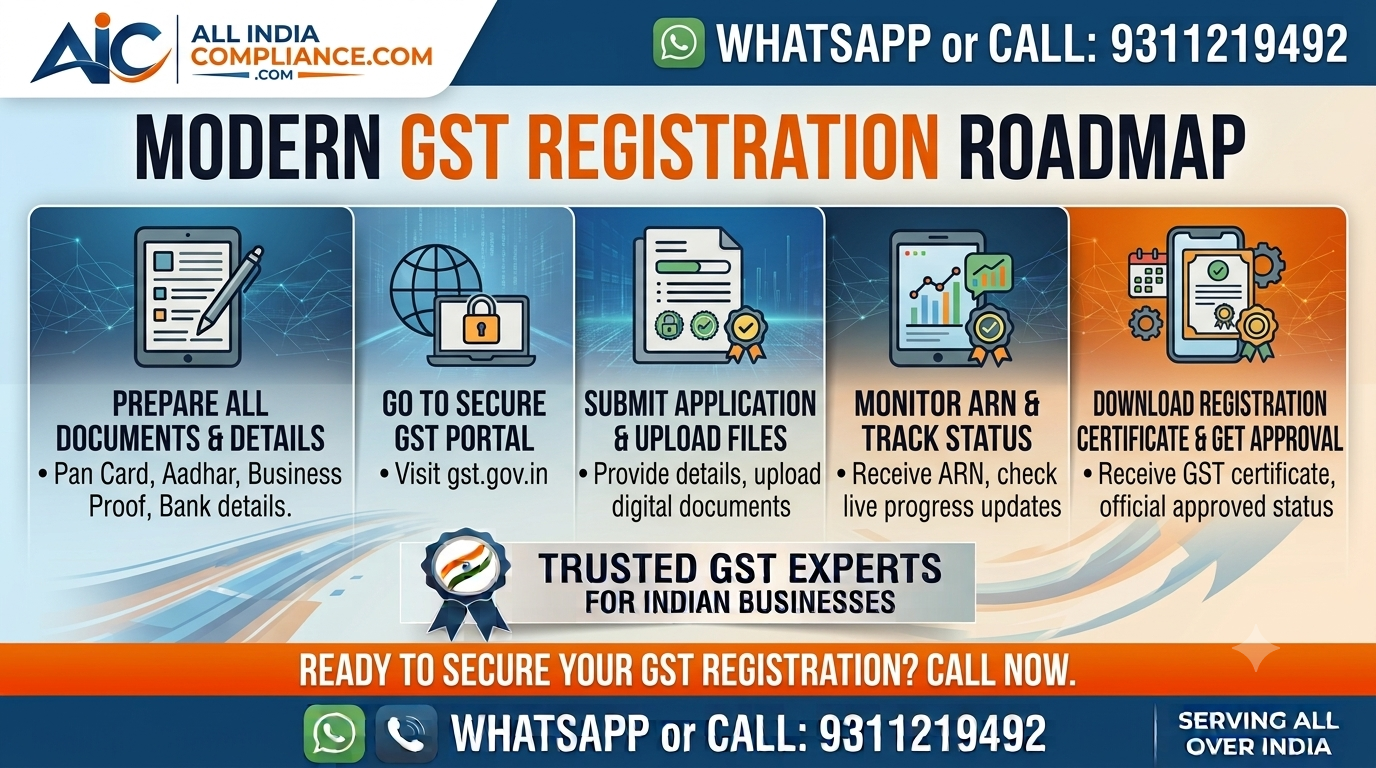
Overview of GST Registration
Goods and Services Tax (GST) is a unified indirect tax system in India introduced to replace multiple local taxes like VAT, Service Tax, and Excise Duty. Obtaining a GSTIN (15 digit Goods and Services Tax Identification Number) gives your business legal recognition and allows you to collect tax from customers and claim credit on business expenses.
Who Needs GST Registration? (Turnover Limits & Eligibility)
GST registration is mandatory for businesses under the following criteria:
Goods Suppliers: Businesses selling goods with an annual turnover exceeding ₹40 Lakhs (₹20 Lakhs for special category northeastern states).
Service Providers: Businesses providing services with an annual turnover exceeding ₹20 Lakhs (₹10 Lakhs for special category states).
E-Commerce Sellers: Sellers listing products on platforms like Amazon, Flipkart, or custom e-commerce websites regardless of turnover.
Interstate Business Operators: Anyone selling goods or providing services across state borders.
Casual Taxable Persons and Non-Resident Taxpayers.
Key Benefits of GST Registration
Input Tax Credit (ITC): Claim back the GST paid on business purchases, raw materials, office equipment, and services, reducing total tax liabilities.
Legal Business Expansion: Operate smoothly across all states in India without dealing with local border taxes.
E-Commerce Portal Eligibility: Sell goods online across major e-commerce marketplaces which strictly require a valid GSTIN.
Higher Credibility: Enhances trust with corporate clients, suppliers, and financial institutions when applying for business loans.
Required Documents for GST Registration
Proprietor / Partner / Director PAN Card and Aadhaar Card
Proof of Business Registration (Partnership Deed, COI, or Lease Agreement)
Address Proof of Business Premises (Electricity Bill, Rent Agreement, or Property Tax Receipt)
Bank Account Details (Cancelled Cheque
or Bank Statement)
Website: allindiacompliance.com
Call / WhatsApp: +91 9311219492