
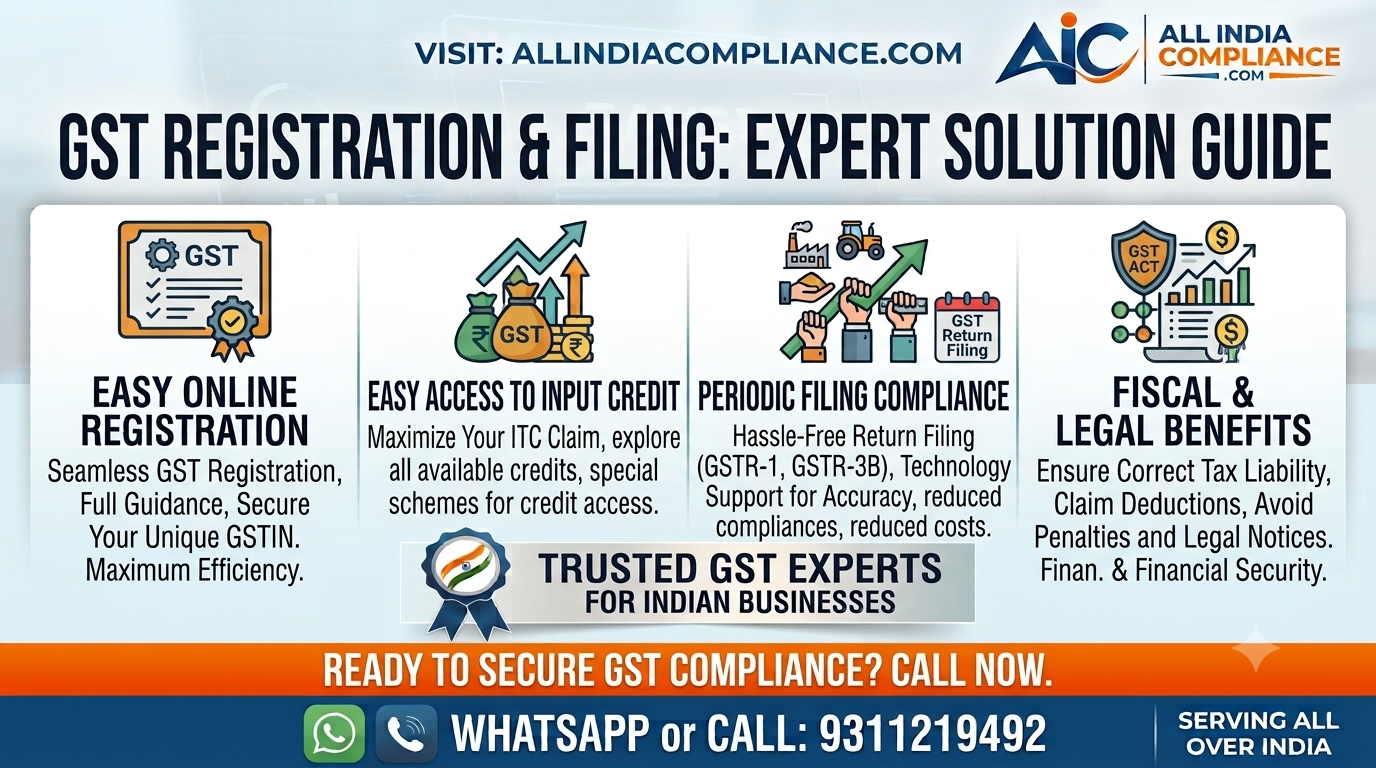
Goods and Services Tax (GST) is a unified indirect tax system in India that streamlines tax collection for businesses selling goods or providing services. Proper GST registration and timely return filing ensure legal compliance and smooth business operations.
Who Needs GST Registration? (Eligibility)
GST registration is mandatory for:
Goods Suppliers: Businesses with an aggregate turnover exceeding ₹40 Lakhs (₹20 Lakhs for special category states).
Service Providers: Businesses with turnover exceeding ₹20 Lakhs (₹10 Lakhs for special category states).
E-Commerce Sellers: Sellers on platforms like Amazon, Flipkart, or custom e-commerce stores (regardless of turnover).
Interstate Businesses: Anyone selling goods or services across state borders.
Important GST Returns & Filing Due Dates
Regular taxpayers must file periodic returns to remain compliant:
GSTR-1: Details of outward supplies (sales).
Frequency: Monthly or Quarterly (QRMP Scheme).
GSTR-3B: Summary of sales, Input Tax Credit (ITC) claimed, and tax paid.
Frequency: Monthly or Quarterly.
GSTR-9: Annual return summarizing all monthly/quarterly filings.
Frequency: Yearly.
Benefits of Timely GST Filing
Input Tax Credit (ITC): Claim credit on tax paid during raw material, service, or equipment purchases.
Avoid Penalties & Interest: Timely filing prevents late fees (up to ₹50/day) and 18% annual interest on unpaid tax liabilities.
Higher Business Credibility: Maintains a high GST Compliance Rating, building trust with buyers and enterprise vendors.
Step-by-Step GST Registration Process
Collect required documents: PAN Card, Aadhaar, Electricity Bill/Rent Agreement, Bank Statement.
Visit - allindiacompliance.com
Call / WhatsApp: +91 9311219492